Xylitol and Oral Health: Does It Actually Prevent Cavities?
What xylitol does to cavity bacteria, what the evidence honestly supports, how gum, mints and toothpaste compare, and why it must be kept well away from dogs.
You have seen it on gum packets, mint tins and toothpaste tubes: "with xylitol." Maybe a dentist suggested it, or a friend swears by it. The question is whether it actually makes a difference to cavities, or whether it is just a sweetener with good marketing.
The short answer: xylitol does something real, the effect is modest, and it depends heavily on how much you use and how often. It can be a helpful extra for some people. It is not a replacement for fluoride toothpaste or cleaning between your teeth.
Before anything else, one safety point that matters more than the dental one.
First, a Warning If You Have a Dog
Xylitol is highly toxic to dogs, even in small amounts. In dogs it triggers a rapid surge of insulin that can send blood sugar dangerously low, often within an hour, and larger amounts can cause liver failure. A few pieces of sugar free gum can be enough to seriously harm a small dog.
If your dog has eaten anything that contains xylitol, call your vet or an animal poison control line straight away. Do not wait for symptoms. Signs include vomiting, weakness, wobbling, collapse and seizures, and they can come on fast.
Keep gum, mints, toothpaste, sugar free baked goods and some nut butters out of reach, and read labels: xylitol is sometimes listed as "birch sugar." It makes sense to keep these products away from cats and other pets as well.
What Xylitol Is
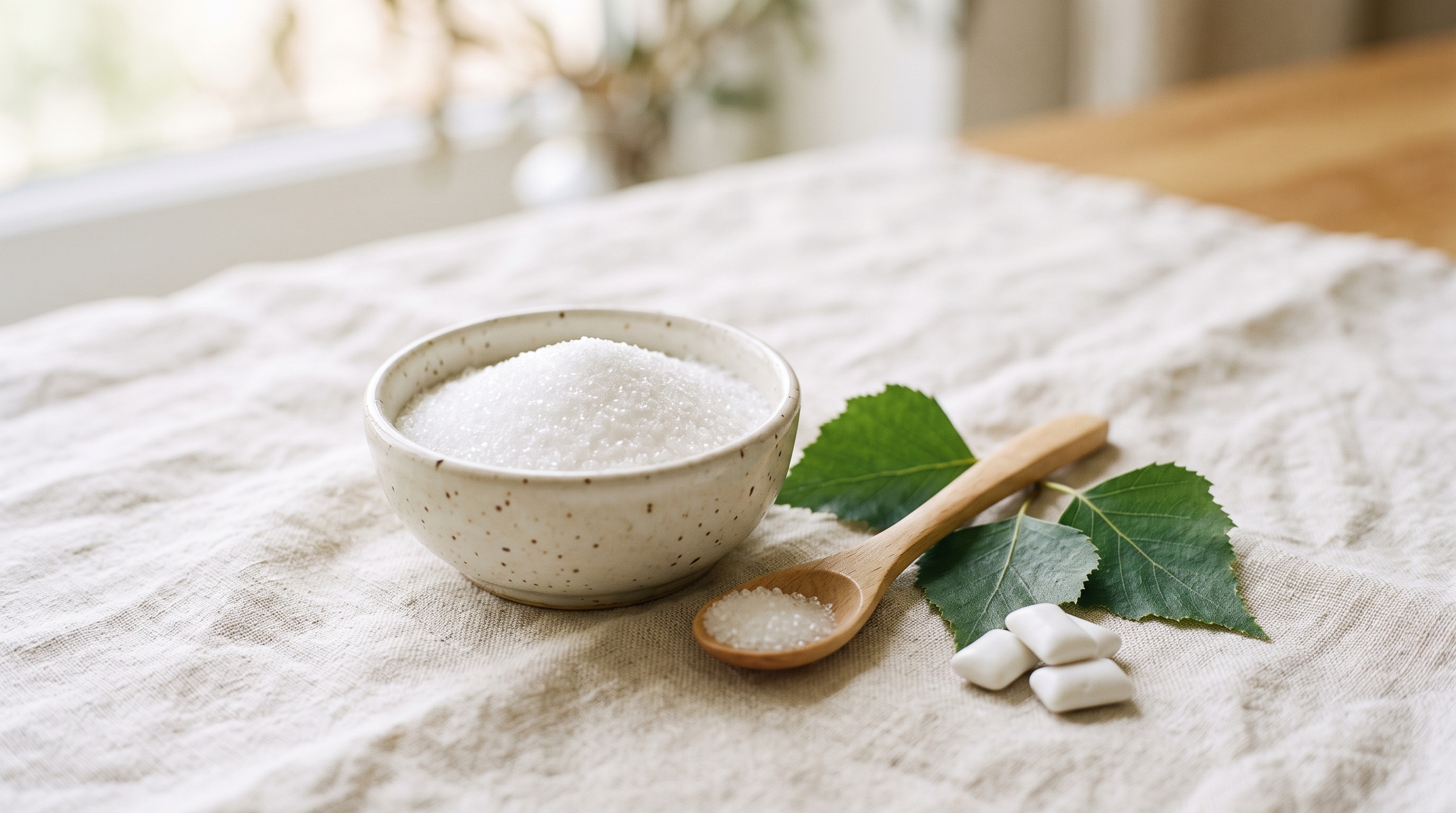
Xylitol is a sugar alcohol, a type of sweetener whose chemical structure resembles sugar but which the body handles differently. Despite the name, it contains no alcohol in the drinking sense. It occurs naturally in small amounts in some fruits and vegetables, and commercially it is usually made from birch wood or corn cobs.
It tastes about as sweet as ordinary sugar, with a slight cooling effect, and it has fewer calories and a much smaller effect on blood sugar. That is why it turns up in sugar free gum, mints, diabetic friendly foods and oral care products.
Why Cavity Bacteria Cannot Use It
To see why xylitol might help, it is worth knowing how a cavity starts. Bacteria in plaque, especially one called Streptococcus mutans, feed on sugars and release acid as a waste product. That acid draws minerals out of your enamel. Every sugary snack or drink sets off a fresh round of acid, and if the attacks come too often for saliva to repair the damage in between, a cavity forms. Our guide to how cavities form and how to stop them walks through that process in more detail.
Xylitol interrupts this in a few ways:
- Bacteria cannot ferment it. Decay bacteria take xylitol in but cannot break it down for energy, so no acid is produced. Swapping a sugary snack for a xylitol one removes that acid attack entirely.
- It may starve the worst offenders. Because Streptococcus mutans wastes energy handling a sugar it cannot use, regular exposure appears to reduce its numbers and make plaque less sticky over time.
- Chewing and sucking bring saliva. Saliva neutralizes acid and carries minerals back into enamel. Some of the benefit people get from xylitol gum likely comes from the chewing itself, which is part of why the research is hard to untangle.
What the Evidence Actually Supports
This is where the marketing tends to run ahead of the science.
Early studies, many from the 1970s through the 1990s, reported impressive drops in cavities among people who used xylitol regularly. When researchers later pooled those studies and looked hard at their quality, many turned out to have design weaknesses: small groups, short follow up, or comparisons that made it hard to tell whether xylitol, chewing, or other changes made the difference.
The fairest summary of the current evidence:
- The effect is real but modest. Xylitol is not in the same league as fluoride, which has far stronger and more consistent evidence behind it.
- Dose and frequency matter. The studies that found a benefit generally used several grams a day spread across three or more sessions. A piece of gum now and then, or the small amount in a toothpaste, is well below that.
- The quality of evidence is mixed. Some larger, well designed trials in adults found no meaningful extra benefit, particularly in people already using fluoride.
- Replacing sugar is the most reliable part. Whatever xylitol does on its own, choosing it instead of sugar clearly helps, because you remove an acid attack.
So if you are at high risk of cavities, xylitol gum or mints used several times a day, especially after meals, may add a small benefit on top of good basics. If your cavity risk is already low, it is unlikely to change much. Not sure which group you fall into? The oral health risk quiz gives you a quick cavity risk estimate.
Gum, Mints, Toothpaste or Sweetener: What to Expect
Not all xylitol products deliver the same amount, and the form matters.
| Product type | How it is usually used | What to realistically expect | Watch out for |
|---|---|---|---|
| Xylitol gum | Chewed for a few minutes after meals and snacks, several times a day | The best studied form. Combines xylitol with extra saliva from chewing. A modest benefit if used often | Choose gum with xylitol listed first in the ingredients. Can aggravate existing jaw problems |
| Xylitol mints or lozenges | Dissolved slowly after meals, several times a day | Similar idea to gum without the chewing. Useful if gum bothers your jaw | Mixed results in adult trials. Choking risk for young children |
| Toothpaste containing xylitol | Brushing twice a day as normal | Fluoride does most of the work. Xylitol adds little, if anything | Make sure it still contains fluoride, because some xylitol toothpastes do not |
| Mouth rinses and dry mouth products | Used when the mouth feels dry, or at night | Comfort for dry mouth, possibly a small extra benefit | Pick alcohol free versions, which dry the mouth less |
| Granulated xylitol as a sweetener | In coffee, tea or baking in place of sugar | Removes the sugar and so the acid attack. Not a treatment in itself | Extremely dangerous to dogs in baked goods left within reach |
| "Tooth friendly" candy and snacks | Occasional treats | Better than sugary versions, but often very little xylitol per serving | Sour versions can contain acids that erode enamel |
How to Use Xylitol If You Want to Try It
- Use it after eating, when acid levels in your mouth are at their highest.
- Spread it across the day. Several short exposures appear to matter more than one large dose.
- Check that xylitol is the main sweetener. Many sugar free gums rely mostly on sorbitol or other sweeteners and contain only a little xylitol.
- Keep the basics. Brush twice a day with a fluoride toothpaste and clean between your teeth. Xylitol goes on top of these, never in place of them. If you are unsure whether fluoride is right for you, here is an honest look at fluoride benefits and safety.
- Start small, because of the digestive effects described below.
What about other sugar alcohols? Sorbitol, very common in sugar free gum, can be slowly fermented by some mouth bacteria, though far less than sugar. Erythritol has some early research suggesting it may be at least as helpful as xylitol, but the evidence is thinner. Any sugar free gum beats sugary gum, because the saliva from chewing helps on its own.
Children and Xylitol
Xylitol has been studied in children in syrups, wipes, gum and candy, with mixed results. There are two practical issues. Gum and hard mints are a choking hazard for young children, so they are not suitable until a child can reliably chew gum without swallowing it. And children are more sensitive to the laxative effect.
For young children, fluoride toothpaste in the right amount for their age, fewer sugary drinks and snacks, and regular dental visits matter far more than xylitol. Ask your child's dentist before adding xylitol products.
Side Effects to Know About
The most common side effect is digestive. Xylitol is only partly absorbed in the gut, and what is left draws water into the bowel. In larger amounts that can mean gas, bloating, cramping, and loose stools or diarrhea. Many people adjust if they build up slowly, but people with irritable bowel syndrome often find sugar alcohols a trigger.
There is also a newer question mark. In 2024 an observational study linked higher blood levels of xylitol with a greater risk of heart attack and stroke, and in a small experiment a large xylitol drink made blood platelets more prone to clotting. That kind of study shows an association, not proof that xylitol causes harm, and the amounts involved were much larger than a few pieces of gum. Still, if you have heart disease or a raised risk of blood clots, it is sensible to talk to your doctor before using xylitol in quantity as a sweetener.
Frequently Asked Questions
Can xylitol reverse a cavity?
No. Once decay has formed a hole, it needs a dentist to repair it. Very early mineral loss, which shows as a chalky white spot, can sometimes harden again with fluoride, saliva and less frequent sugar, and xylitol may play a small supporting role there. It does not rebuild a cavity.
How much xylitol gum should I chew?
The studies that showed a benefit generally used gum several times a day, typically after meals, rather than one piece now and then. Check the package for the amount per piece and the suggested daily use, and build up gradually to avoid stomach upset. If you have jaw pain or clicking, mints or lozenges are kinder to your jaw.
Is xylitol toothpaste better than fluoride toothpaste?
No. Fluoride has much stronger evidence behind it for preventing cavities. A toothpaste with both is fine, but a xylitol toothpaste without fluoride is a step down for most people, not an upgrade.
Is xylitol safe for people with diabetes?
It has a much smaller effect on blood sugar than ordinary sugar, which is why it appears in many diabetic friendly products. It still contains some calories and carbohydrate, so count it if you track carbohydrates, and ask your doctor or diabetes team if you plan to use it in larger amounts.
My dog ate sugar free gum. What should I do?
Call your vet or an animal poison control line immediately, even if your dog seems fine. Xylitol can drop a dog's blood sugar quickly, and symptoms can come on suddenly. Keep the packet with you so you can say what was eaten and roughly how much.
Does chewing any sugar free gum help my teeth?
Yes, to a degree. Chewing sugar free gum after meals increases saliva, which neutralizes acid and helps enamel recover. Xylitol may add a little on top, but the chewing itself is doing a useful share of the work.
What to Do Next
If you want to try xylitol, choose gum or mints where xylitol is the first ingredient, use them after meals a few times a day, and start slowly. Keep fluoride toothpaste and cleaning between your teeth as the foundation.
If you keep getting new cavities despite good habits, ask your dentist about your personal risk. Prescription strength fluoride toothpaste, fluoride varnish, sealants and changes to how often you snack all have stronger evidence than xylitol alone.
And if there is a dog in your home, store every xylitol product as carefully as you would store medicine.
This article is for general information only and is not a substitute for professional dental advice. Always consult your dentist about your individual needs.